




Do you wish you knew how to feel happy again? I've been there. After my divorce in my 40s, I went through a long stretch of unhappiness. My self-esteem, my finances and my hopes for the future all seemed doomed. But I came out the other side, and today I'm happier than I've ever been.

So why does happiness feel so much harder to find after 40? For a lot of us, midlife is when everything changes at once. The kids grow up and need us less, careers shift, parents get older, relationships change, and our bodies and hormones join the party too. It's no wonder so many of us feel a little lost. Economists have even found that happiness tends to dip in middle age in countries all over the world, and then climb again as we get older. So if you're feeling stuck right now, you're not broken, and you're definitely not alone.
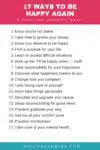
The good news? You can make yourself happy again, one small step at a time. Here are the 17 simple things that worked for me.
Jump to:
How to Feel Happy Again: 17 Simple Ways to Make Yourself Happy Again
You don't have to do all of these at once. Read through the list, pick the one or two that feel doable today, and come back for more when you're ready.

1. Know that You're Not Alone
If you're feeling depressed and unworthy right now, the first thing you need to know is that you're not alone. Many, many women feel sad and purposeless when their kids grow up and leave home.
You're also quite normal. Midlife is a time of change. Your children grow up and don't need you as much. Your career may be changing. It's easy to feel stressed and defeated.
In fact, I can prove to you that you're not alone. Just notice all the tweets I've used to illustrate this post.

2. Take Time to Grieve Your Losses
I know it's weird to talk about grieving in a post about happiness. But we cannot get past emotions that we haven't taken time to process. If you're feeling sad about a loss in your life, take some time to write down your feelings. Write about what you enjoyed and what you'll miss the most. Really take the time to pinpoint your exact feelings.
You'll probably cry. And that's great because it means that you're not blocking out your feelings.
If you have experienced trauma in your past, you may find it hard to experience happiness now. If that's the case, I highly recommend the book Writing as a Way of Healing: How Telling Our Stories Transforms Our Lives by Louise DeSalvo. This book helped me enormously to heal after my divorce.

3. Know You Deserve to Be Happy
This is perhaps the most important step in learning to be happy: you must believe that you deserve happiness.
As women, we are often taught to serve others and put ourselves last. If you were brought up in a religious home, as I was, you may have even been taught that happiness was somehow sinful or even that it was somehow more noble to suffer. After all, "Blessed are those who are persecuted because of righteousness, for theirs is the kingdom of heaven." (Matthew 5:10)
I no longer believe this. In fact, if you look at the Bible, while much of it may be about suffering, the underlying theme tends to be more along the lines of "sure you'll suffer (as everyone does in life), but you'll receive comfort so that you may comfort others."
For example,
Praise be to the God and Father of our Lord Jesus Christ, the Father of compassion and the God of all comfort, who comforts us in all our troubles, so that we can comfort those in any trouble with the comfort we ourselves receive from God.
2 Corinthians 1:3-4
That's one reason why you deserve happiness. You deserve happiness, because you cannot brighten the world unless you have the light of happiness inside you first. By taking care of yourself, by working on your own happiness, you can make the world happier.
The other reason you deserve to be happy is because you exist.
4. Find a Purpose for Your Life
It is so important to feel like your life has a meaningful purpose! Several studies have shown that people with a strong purpose in life:
If you're a recent empty nester, you may feel like you've lost your purpose in life. After all, your life was devoted to raising healthy, happy kids and now that job is over.
It's completely normal to feel a lack of purpose in your life when your children leave home. If you feel this way, finding a new purpose in life can be the most impactful way to find happiness again.
I used to resist the phrase "purpose in life" because it implies that you need to have a grand ambition or a life devoted to serving others. However, I learned while reading Barbara Bradley Hagerty's excellent book, Life Reimagined: The Science, Art, and Opportunity of Midlife that your purpose in life is simply the thing in your life that keeps you engaged and gives you a reason to get up in the morning.
Your purpose in life can be as big as curing world hunger or as small as completing the Monday crossword in the New York Times. It just needs to interest and motivate you. If you're not sure where to start, finding a hobby you love is a wonderful first step, and making a vision board can help you picture the life you want next.
If you're interested in figuring out your purpose in life, check out Life Reimagined. Hagerty provides a comprehensive road map for defining a life you love in midlife and beyond. You'll find more of my favorites in this list of books that will change your life.
5. Learn to Accept Difficult Situations
In order to find happiness again, you must learn to accept the difficult situations in your life. That means acknowledging how things really are instead of avoiding our problems or spending energy wishing that things would change without any action on our part.
I've struggled in the past with what it means to accept a problem. To me, it sounded like giving up. Accepting a difficult situation simply means accepting your current reality as it truly is.
Let's say your beloved father dies suddenly. What's more, he dies without a will and, thanks to a difficult relationship with your mother, it appears you won't be receiving anything from his estate even though you know he would have wanted to see you receive something.
Accepting this difficult situation looks like:
- Grieving your father's death
- Feeling some anger that he has put you in this situation
- Reaching out to a lawyer to discuss your options
- Trying to discuss a compromise with your mother
As you can see, accepting the situation doesn't mean you need to give up, it just means you understand that given your current reality, these are the actions you need to take.
Not accepting this situation could look like:
- Replaying past events over and over in your head (I could have/ I should have done this) without taking any action
- Complaining to other people about your mother's behavior ("This is so unfair!")
- Threatening your mother
- Trying to take what you believe to be rightfully yours
As you can see, accepting reality is ultimately the most peaceful and most productive path forward, even though it can feel like the most difficult path.
If you avoid your problems because they feel too painful or ask "Why is this happening to me?", you'll only prolong your suffering. Avoiding problems or railing against them won't change reality and you'll stay stuck in the pain of your situation.
Once you accept reality, you're taking the first step toward moving on from your problem. I took the first step toward moving out of the financial stress caused by my divorce the day I finally opened the envelopes piled up on the kitchen counter and made a list showing just how much money I owed.
You can (and probably will) accept your situation and grieve your losses at the same time. The book Radical Acceptance: Embracing Your Life With the Heart of a Buddha by Tara Brach is really helpful for learning how to accept and get through tough situations.

6. Give Up the "I'll Be Happy When..." Myth
Are you a victim of the "I'll be happy when..." myth? You know, the one where you just know that if you could only have that new car, or lose those last ten pounds, or win the lottery, then you'll finally be happy?
Guess what? You're probably wrong. According to Dan Gilbert, author of Stumbling On Happiness, people are terrible at predicting what will make them happy. If you lost those ten pounds, it might thrill you when you see the number on the scale. But then you look in the mirror and realize you have so many wrinkles. How did this happen? Now you're obsessing about that.
If we truly want to be happy, we have to give up the "someday" myth and focus on how we can be happy right here, right now, in our very real and very imperfect day-to-day life.

7. Take Responsibility for Your Happiness
It takes many of us far too long to realize this (raises hand), but other things or other people cannot make you happy. If you put your happiness in the hands of something or someone, you'll always feel insecure because the source of your happiness could go away at any moment.
Instead, true happiness comes when we figure out how to take responsibility for our own happiness. This means not blaming your circumstances or other people for your unhappiness and figuring out ways to find happiness despite the obstacles in your life.
When we take responsibility for our own happiness, we develop the confidence we need to withstand tough times in life. We're empowered to look for solutions to our problems, rather than feeling stuck by circumstances.
I struggled with taking responsibility for my own happiness for so long. It was always someone else's fault or some external situation that needed to change. During one of my lowest moments, I thought to myself, "Nobody is coming to help you. You're going to have to handle this alone."
I was astonished to realize how good that thought felt! It occurred to me that if finding my way to a happier life was solely up to me, then I didn't have to wait any longer for things to change. I could start building a happy life at that very moment!
I'd like to say that I was a happy person from that moment on, but unfortunately that's not true. I had a lot to learn about building a better life. But taking responsibility for my own happiness was a huge turning point in my journey to becoming happier.
8. Discover What Happiness Means to You
If you want to be happy, you need to know what makes you happy so you can do more of it. Seems easy enough, right? But do you really know what makes you happy?
Take a minute and list 50 things that make you happy. Be sure to focus on things that really make you happy. Don't add the things you think should make you happy but don't, or things you think will make you happy when (and if) they happen. Just focus on listing 50 things that you know bring you happiness.
If you're having a hard time coming up with 50 things, try keeping a Happiness Log for a few days. Each time you notice that you're feeling happy, write down what you were doing and why you were happy. I made a free printable Happiness Log to make it easy (you'll find it just below).
Now that you have your list, focus on adding in at least one thing from the list to your routine every day. Noticing those little moments is also the heart of learning to romanticize your life, which is one of my favorite ways to make an ordinary week feel special.

9. Change How You Complain
The words we use can shape our lives. If we spend our time complaining, we're going to have more to complain about. It's a simple concept, but it's really true.
When we complain, we turn ourselves into a helpless victim. "Oh, man. Look how long this line is. We'll be here all day!" Saying things like that gives our subconscious the message that we're stuck and that nothing can be done.
Constant complaining also turns off the people in your life. If nothing makes you happy, the people around you will give up even trying to make you happy. They'll also want to stop being around you. Now you've got a self-fulfilling prophecy. "Everyone I know always ends up backing away."
However, refusing to complain doesn't mean that you can't notice and comment on negative experiences. (Remember, we're accepting reality here.) It just means that you need to reframe your comment so that it includes a solution.
Instead of "Look how long this line is. We'll be here all day!" try something like, "Oh, wow. This line is so long. Next time I'll come earlier in the day."
It's impossible to say "From this day on, I'll no longer complain." We've all been complaining since our first days as a little baby. Instead, try a "No Complaint Challenge." For 21 days, start each day with a bracelet (or even a rubber band) on your left hand. If you notice yourself complaining, switch the bracelet to the other hand and restart the challenge at Day 0. You'll start noticing how often you complain and get better at reframing your complaints into solutions.

10. Take Loving Care of Yourself
We would do anything for those we love, but we'll put off taking care of our own well being. We'll skip a day at the gym, put off going to the doctor, or work ourselves to exhaustion because we're just too darn busy taking care of everyone else.
If you're feeling unhappy, maybe you simply need to stop and take care of yourself. Make sure you take care of yourself first every day so you have the energy to take care of others.
Taking care of yourself can look like:
- Scheduling that overdue doctor's appointment.
- Making sure you get a full night's sleep.
- Feeding yourself nourishing food.
- Taking a walk outside.
- Taking a nap.
- Spending time on your hobbies (here's how to find a hobby as an adult if you've lost touch with yours).
- Having a good chat with a supportive friend. If your circle has gotten smaller over the years, these tips for making new friends over 50 can help.
- Reconnecting with your partner. These questions for couples are a fun way to start a real conversation.
- Asking for help.
Taking loving care of yourself also means practicing self-compassion and kindness, just as you would treat anyone you love.
Do something special for yourself every day, even if it's just taking 20 minutes to read your favorite book or taking a relaxing bubble bath. When you take care of yourself, you'll be happier and have more to give to those you love. This matters even more during the busiest time of year, so I put together these holiday self-care tips too.

11. Don't Take Things Personally
Never ascribe to malice that which is adequately explained by incompetence.
Napoleon Bonaparte
This quote has always resonated with me because it's so true. Too often, we assume the actions of the other people we encounter directly result from what they think about us.
I do this all the time. Just the other day, I felt hurt because the cashier at Target was smiling and joking with the person in front of me, but then turned into all business while checking me out. Why did he do that? What's wrong with me?
The truth is, most people aren't thinking about you. They're thinking about themselves. You know, just like you do all day long. Realizing that can help you drop a lot of anxiety you might carry around.

12. Declutter and Upgrade Your Space
Your environment has a powerful impact on your mood. If you're constantly surrounded by clutter and mess, you'll feel stressed and chaotic. If your environment is clean and organized, you'll feel more at ease. Turning your home into a calm and peaceful oasis can significantly enhance your life satisfaction.
If you've been depressed for a while, you may be so overwhelmed by clutter, you don't even know where to start. That's ok, I've got some tips to help you get started with decluttering when you're overwhelmed.
You'll Also Love

Once you've decluttered, take a walk-through your home or workspace and notice which areas cause you to feel stressed or unhappy. Is there something you can do to improve this area?
Here are a few things you can do to upgrade your space:
- Add some plants.
- Change your window treatments (or get rid of them!) to let in more natural light.
- Clear any piles of clutter.
- Replace chipped dishes and broken cutlery.
- Hang a picture that makes you smile.
- Rearrange your furniture.
- Paint a wall with a cheery color.
- Add some candles to make your room cozier.
- Add throw pillows for a pop of color.
- Add a reading nook.
- Replace ugly and outdated light fixtures.
13. Stop Doomscrolling and Start Gleefreshing
I developed a terrible habit over the last few years. I'd wake up, grab my phone and start obsessively scrolling through Twitter to see what awful new thing happened overnight. And guess what? I always found something. I often worked myself into a state of righteous anger before I even got out of bed.
You don't have to be a psychologist to see that tapping into negative emotions repeatedly hurts your mental health.
If you've fallen into the doomscrolling habit, try swapping it for gleefreshing - using your phone for good news - instead. I started gleefreshing a few years ago, when I turned my Instagram feed into an oasis of self-care. First, I unfollowed any people or topics that made me feel bad (you know, like those women with photos of them looking perfectly put together while doing impossible yoga routines at 5am). Then, I curated Instagram accounts that made me smile or lifted my spirits. Now I can start every day by scrolling through bright photos of beautiful food and cute animals.

14. Practice Gratitude in a Way That Works for You
By now, tons of scientific studies have proved that practicing gratitude makes you happier. Most articles that discuss the power of gratitude recommend keeping a gratitude journal, a journal where you list a few things that you're grateful for each day.
Gratitude journals can be a really helpful tool for practicing gratitude. But they can also do more harm than good if you use it to gloss over negative emotions or if keeping the journal starts to feel like a chore.
If you want to start a gratitude journal, this article has helpful tips on how to use it most effectively to increase your happiness. A guided journal like The Five Minute Journal makes it easy to stick with because each day only takes a few minutes. But, if you don't enjoy keeping a journal or you find that you just never seem to write in it, there are other ways to practice gratitude that can work.
Here are a few things I like to do to practice gratitude in my own life:
- Take a photo of something that makes you happy every day. Keep them in a special album on your phone so you can easily look through the photos whenever you want.
- Keep a Gratitude Jar. Keep a jar and several strips of paper along with a pen somewhere visible. Each time you notice something that you're grateful for, write it on the slip of paper and tuck it into the jar.
- Write a Gratitude Letter to someone who's helped you in the past.
- Listen to a guided gratitude meditation.
- Give someone in your life a sincere compliment.
15. Get out of Your Comfort Zone
I'm a creature of habit. I feel safest and most comfortable when I follow a regular routine. I know what to expect and I'm in control.
But following the same routine day in and day out can quickly lead to boredom and unhappiness.
One way to combat this is by getting out of your comfort zone and trying something new.
As Gretchen Rubin says, "... often we're happier, we feel more energetic, more productive, more creative when we try something new, when we challenge ourselves a little bit, when we kind of go out of that comfort zone. That atmosphere of growth can really boost our happiness."
You don't have to jump out of an airplane or (my personal biggest fear) stand on the street asking strangers to hug you to get a happiness boost. Your "new thing" can be as simple as taking a different route to work or trying a new food.
If you would like some inspiration, check out Michelle Poler's 100 Days Without Fear on YouTube. She started by making a list of all her fears and then did at least one item on her list every day for 100 days in a row.
That reminds me - I'm still afraid of frying foods.

16. Practice Mindfulness to Stay in the Present Moment
"Practice mindfulness" is a common tip for increasing happiness. At its core, mindfulness means observing the present moment and your emotions in a non-judgmental way.
But what does that even mean? And how would that help you be happier? We've already discussed two components of mindfulness: accepting your current situation even if it's difficult and treating yourself lovingly.
That can mean telling yourself something like, "Right now, I'm having a difficult time at work. I'm going to look at some ways I can improve my performance without beating myself up."
Or, "I had a really tough day. I'm going to give myself some time tonight to relax and watch my favorite show without feeling guilty."
But there's another component to practicing mindfulness, and that's developing the ability to stay focused on the present moment.
This means focusing on what is happening to you right now, rather than letting your mind wander to the past (which can often be a source of regret or sadness) or the future (which can often be a source of anxiety). Or rather than simply letting your mind wander, like I did a few minutes ago when I suddenly found myself searching online for dinner ideas while writing this blog post.
Mindfulness meditation is a great way to train yourself to slow down and stay in the present moment, but you can also incorporate mindfulness in your daily life:
- When you're eating, focus on the taste, texture, and smell of the food.
- When you're walking, feel your feet hitting the ground and notice the surrounding sensations.
- When you're showering, feel the water running over your body.
- When you're waiting in line, notice how you feel and pay attention to your surroundings.
- Sit quietly for one minute and focus on the sounds around you.
- Eat with your non-dominant hand and pay attention to how awkward that feels.
- Clean your sink while focusing on how the water feels and noticing how the dirt washes away.
- Listen to music by sitting down with your eyes closed and focusing on the sensations you feel.
- Stop and look around your surroundings for all the items in a certain color.

17. Take Care of Your Mental Health
I've shared a few of the ways I've been able to learn how to be happy again in my own life after the dark period following my divorce several years ago. However, the most important step I took was reaching out to my doctor.
Therapy and medication so that my brain chemistry could support my happiness were both important to my healing process. Doing those things allowed me to work through my pain in a healthy way and eventually find happiness again.
If you're feeling really down and nothing seems to help, please reach out to a qualified mental health professional. I promise it will make a world of difference.

Frequently Asked Questions About Feeling Happy Again
Can I really be happy again?
Yes. Happiness isn't a fixed trait you either have or don't. It comes from small, everyday habits, the people around you and how you care for yourself, and all of those can change. I truly believed I'd never feel like myself again after my divorce, and I was wrong. It took time, but it happened, and it can happen for you too.
How do I start feeling happy again when I feel stuck?
Start smaller than you think you need to. Pick one tip from this list, like a short walk outside or writing down three things that made you smile today, and do it every day for a week. Small wins build momentum, and momentum is what gets you unstuck. Trying to fix everything at once usually just leaves you feeling more overwhelmed.
What can I do today to make myself happy again?
Do one thing from your own happiness list. Call a friend you've been meaning to catch up with, get outside for 15 minutes, tidy one small corner of your home, put your phone down an hour before bed, or do something kind for someone else. None of these will change your life overnight, but each one gives your mood a real little lift, and they add up.
Why is it harder to be happy after 40?
Midlife tends to pile big changes on top of each other: kids leaving home, aging parents, career shifts, relationship changes and hormones, often all at the same time. Research on the happiness "U-curve" shows that life satisfaction often dips in our 40s and early 50s and then rises again, so a midlife slump is very common and usually temporary. Knowing that can take a lot of the pressure off.
When should I talk to a professional?
If you've felt sad, empty or hopeless most days for more than two weeks, if you've lost interest in things you used to enjoy, or if it's getting in the way of work, sleep or relationships, please talk to your doctor or a licensed therapist. Depression is a real medical condition, and treatment works. If you're ever having thoughts of harming yourself, call or text 988 to reach the 988 Suicide & Crisis Lifeline in the US, any time of day.
More Ways to Take Care of Yourself
If you're working on feeling like yourself again, you might also enjoy these:
- Simple self-care ideas for a healthier mind and body
- Powerful ways to romanticize your life
- How to find yourself again
- Essential tips for holiday self care
- Books that will change your life
I hope these tips have given you some ideas for how to be happy again. If you've tried any of them or have tips of your own, please share in the comments!
Carol salafia says
My friend refuses to take meds and therapy and no self help. What do I do?
Robyn Edward says
I found this article very informative. It put together lots of actions we can take to improve our lives. Lots of good references as well if we want to explore topics further - well done!
Carol Camus says
Loved the insight. Many suggestions are so right on point. Some with a thump on the forehead feel. Makes you realize how great things are and how really bad they can be. When things get rough, look up and smile.
Vicky says
Thank you! I know now I am not crazy!!
Tejaswini says
This blog has helped me feel better and be look at my life positively. Hope you are doing great and feeling at peace as well. Thankyou for sharing this.
Iris says
Thank you this helped a lot today